How white should veneers be?
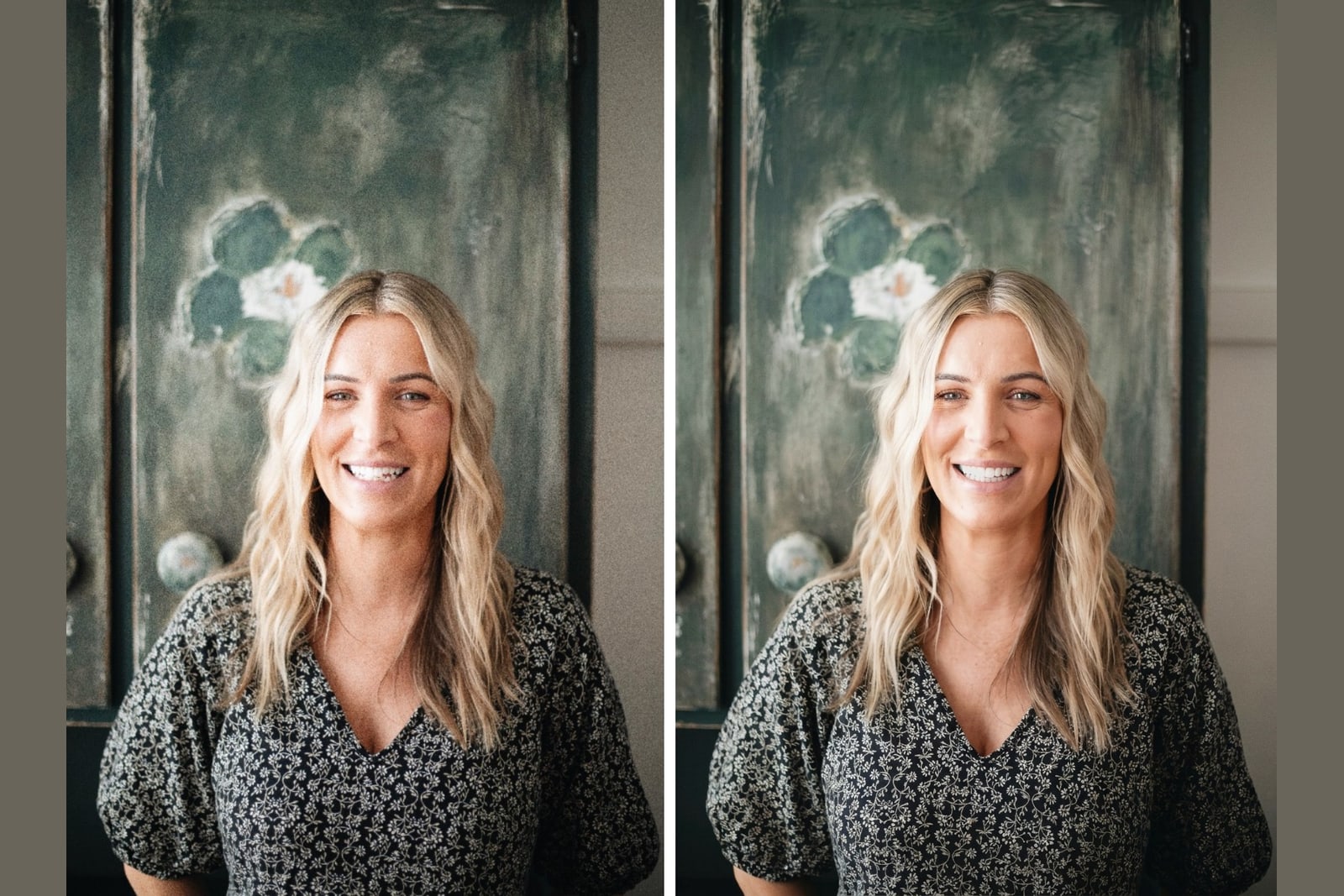
Veneers should be as white as the whites of your eyes, or one step brighter. On the A1 to BL1 scale, that puts many people between Natural Ivory (A1) and a bright natural white. Go too far past your eye white and the smile starts to read as fake instead of healthy.
Key takeaways
- Match your veneer shade to the whites of your eyes for a healthy, believable result.
- The scale runs from Natural Ivory (A1) at the natural end to Ultra White (BL1) at the boldest.
- Skin tone and age shift which shade looks right on you, not just personal taste.
- Too white means a shade that fights the rest of your face rather than fitting it.
Veneerly is an aesthetic preview tool. It is not dental or medical advice and it is not a substitute for a consultation with a licensed dentist.
What does too white actually mean?
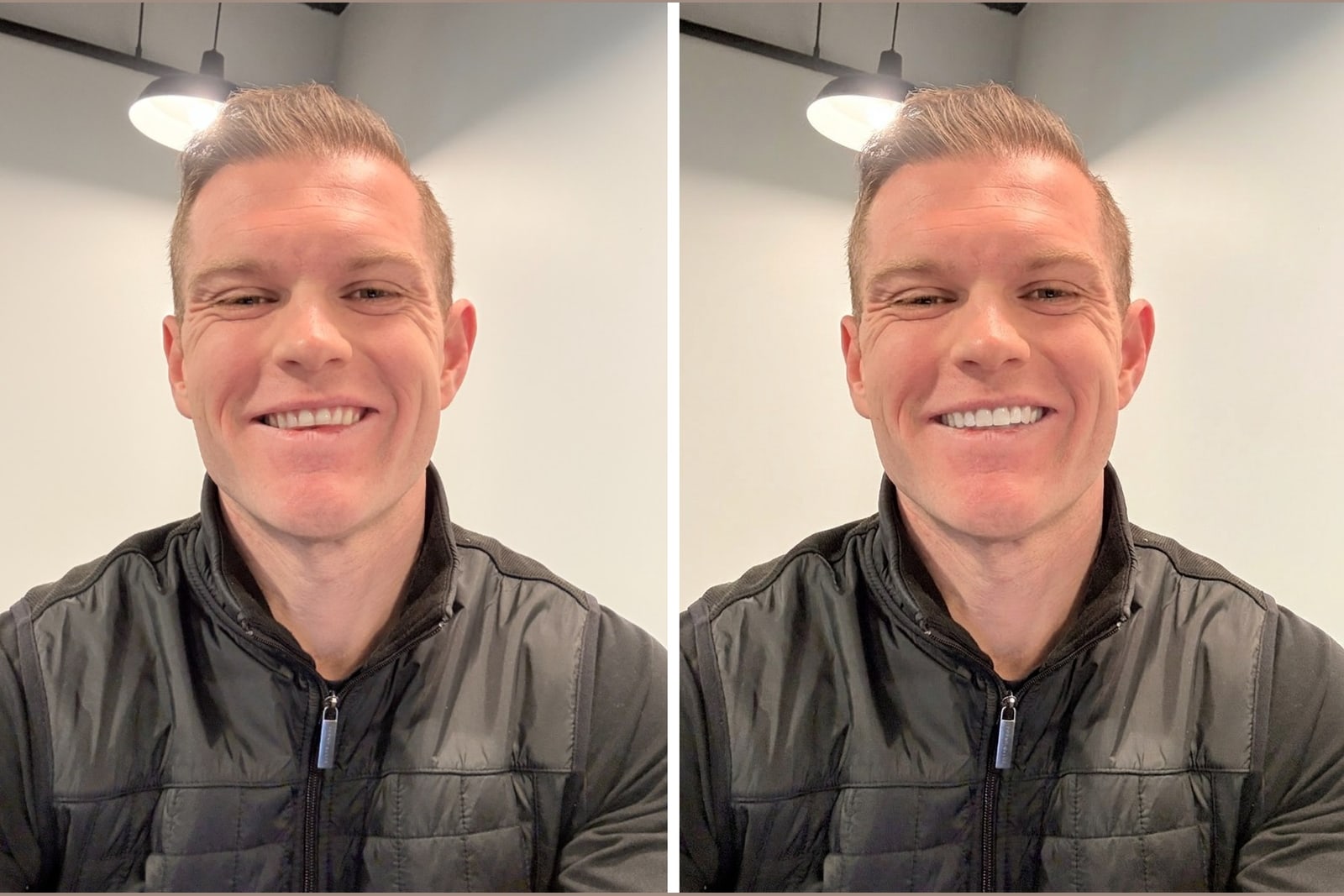
Too white is a shade that is brighter than everything else on your face, so your smile stops looking like teeth and starts looking like a product. The reference point people use is the whites of your eyes. When teeth are whiter than your eye whites, the contrast reads as artificial. When they sit at or just past that point, the smile reads as healthy and real. This is why the same shade can look great on one person and off on another.
How the A1 to BL1 scale works
Veneer color runs on a scale from Natural Ivory (A1) at the natural end to Ultra White (BL1) at the brightest. A1 keeps warmth and reads as a good, healthy tooth. BL1 is the maximum bright, uniform white you picture on a red carpet. Veneerly offers six shades across that range so you can see each one on your own smile instead of guessing from a color chart. For the full breakdown, see the veneer shades guide.
| Shade | The look | Who it suits |
|---|---|---|
| Natural Ivory (A1) | Warm, natural white with visible tooth character | Softer looks and mature faces |
| Bright natural white | Clean and fresh, still believable as your own teeth | People who want a lift no one questions |
| Bold white | Clearly whitened, noticeable across a room | A confident, camera ready smile |
| Ultra White (BL1) | Maximum uniform bright, full veneer look | Maximum impact and dramatic transformations |
How does skin tone change the right shade?
Your skin tone sets the contrast, so the same shade lands differently on different people. Deeper and warmer skin tones create high contrast, which means a bright white pops harder and can tip into too white sooner. Cooler and lighter skin tones carry brighter shades with less of a jump. This does not mean one group must stay dim and another can go bold. It means you should preview the shade against your own face, because the number on a chart tells you nothing about how it reads on your skin.
Does age matter when choosing white?
Age matters because a shade that looks natural at 25 can look off at 55. Natural teeth pick up warmth and character over time, so an ultra bright, perfectly uniform white on an older face creates a mismatch that draws the eye. A warmer shade like Natural Ivory (A1) or a bright natural white keeps the smile believable while still looking fresh. Younger faces carry brighter shades more easily, but the eye white rule still holds at any age.
A simple way to test if a shade is too white
- Look at the whites of your eyes in good light. That is your natural white reference.
- Compare a shade against it. At or one step brighter reads healthy.
- Two or more steps past your eye white starts to read as fake.
- View the shade next to your skin and lips, not on a white background.
- Preview the shade on your own photo before committing to anything permanent.
Shade and style work together
White is set by the shade, but how it reads also depends on the style, the shape and character of the smile. A soft, natural style with a moderate shade looks like healthy teeth. A bold, broad style at Ultra White (BL1) reads as a full transformation. If you push both the boldest style and the brightest shade at once, the effect is strongest and least subtle. Learn how shape and color interact in the guide to veneer styles, then set your shade to match the look you want.
See the shade on your smile before you decide
The reliable way to answer how white your veneers should be is to see the shades on your own face, not a chart. Veneerly renders ten designs across five styles in about 60 seconds from one photo of your real smile, with six shades from Natural Ivory (A1) to Ultra White (BL1). Only the teeth change, so you can compare shades against your own skin, lips, and eye whites. It is a one time payment from 39 dollars and it is an aesthetic preview, not dental advice.
Frequently asked questions
How white should veneers be to look natural?
Match your veneers to the whites of your eyes, or go one step brighter. That range reads as healthy and believable. On the shade scale this often lands between Natural Ivory (A1) and a bright natural white rather than the boldest options.
What is the whitest veneer shade?
Ultra White (BL1) is the brightest shade, a maximum uniform white with a full veneer look. It suits dramatic transformations and camera ready smiles. It can read as too white if it is brighter than the rest of your face.
Can veneers be too white?
Yes. Veneers are too white when the shade is brighter than your eye whites and fights the rest of your face, so the smile looks fake instead of healthy. The fix is choosing a shade that fits your skin tone and age.
What veneer shade looks best on older skin?
Warmer shades like Natural Ivory (A1) or a bright natural white tend to look best on mature faces. They keep the smile believable because natural teeth carry warmth with age. An ultra bright uniform white can create a mismatch that draws the eye.
How do I know which shade suits my skin tone?
Preview the shade against your own skin, lips, and eye whites rather than a white chart. Deeper and warmer skin tones create higher contrast, so bright shades pop harder. Seeing a shade on your real photo removes the guesswork.
See every shade on your real smile
Upload one photo and compare six shades from Natural Ivory (A1) to Ultra White (BL1) in about 60 seconds.
Preview my smile